Instrument and equipment comparison
Electronic drum kits for home practice: pads, pedals and listening options
For home practice, compare the physical kit as carefully as the sound module. You need room to sit and move, pedals that suit your practice, and a way to hear the module. Headphones can change how you listen, but they do not make the sound of sticks striking pads or pedals working against the floor disappear.
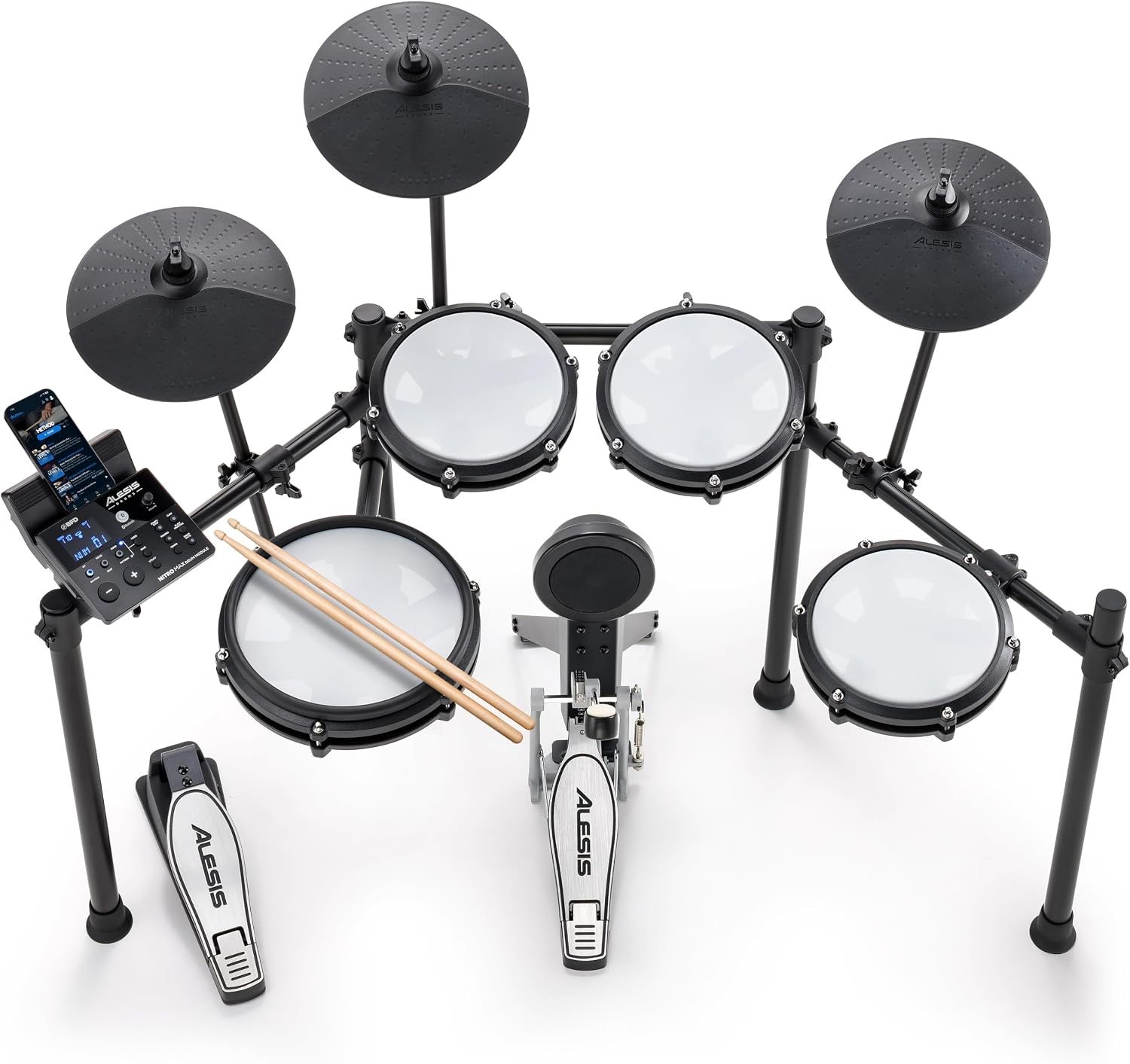
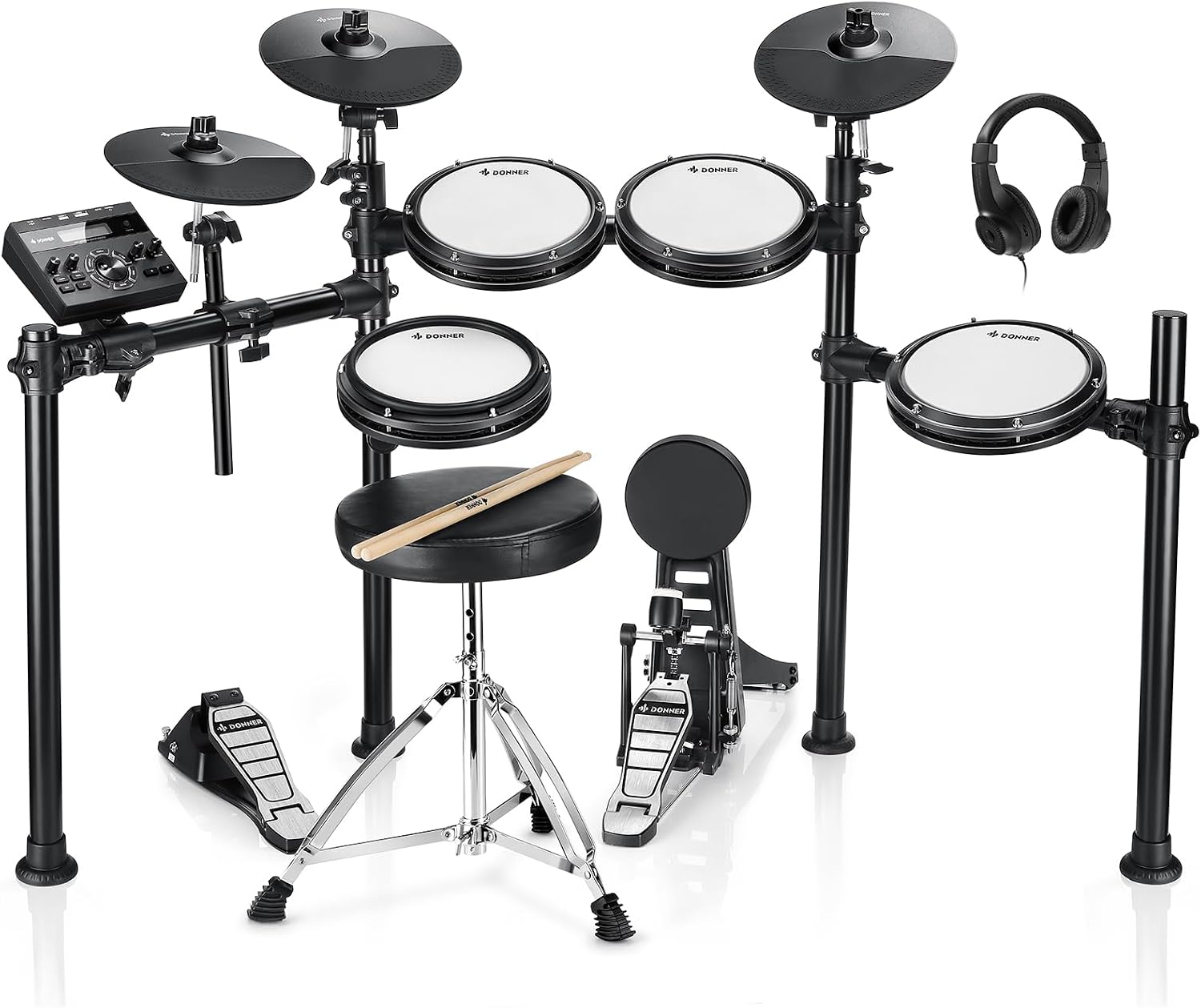
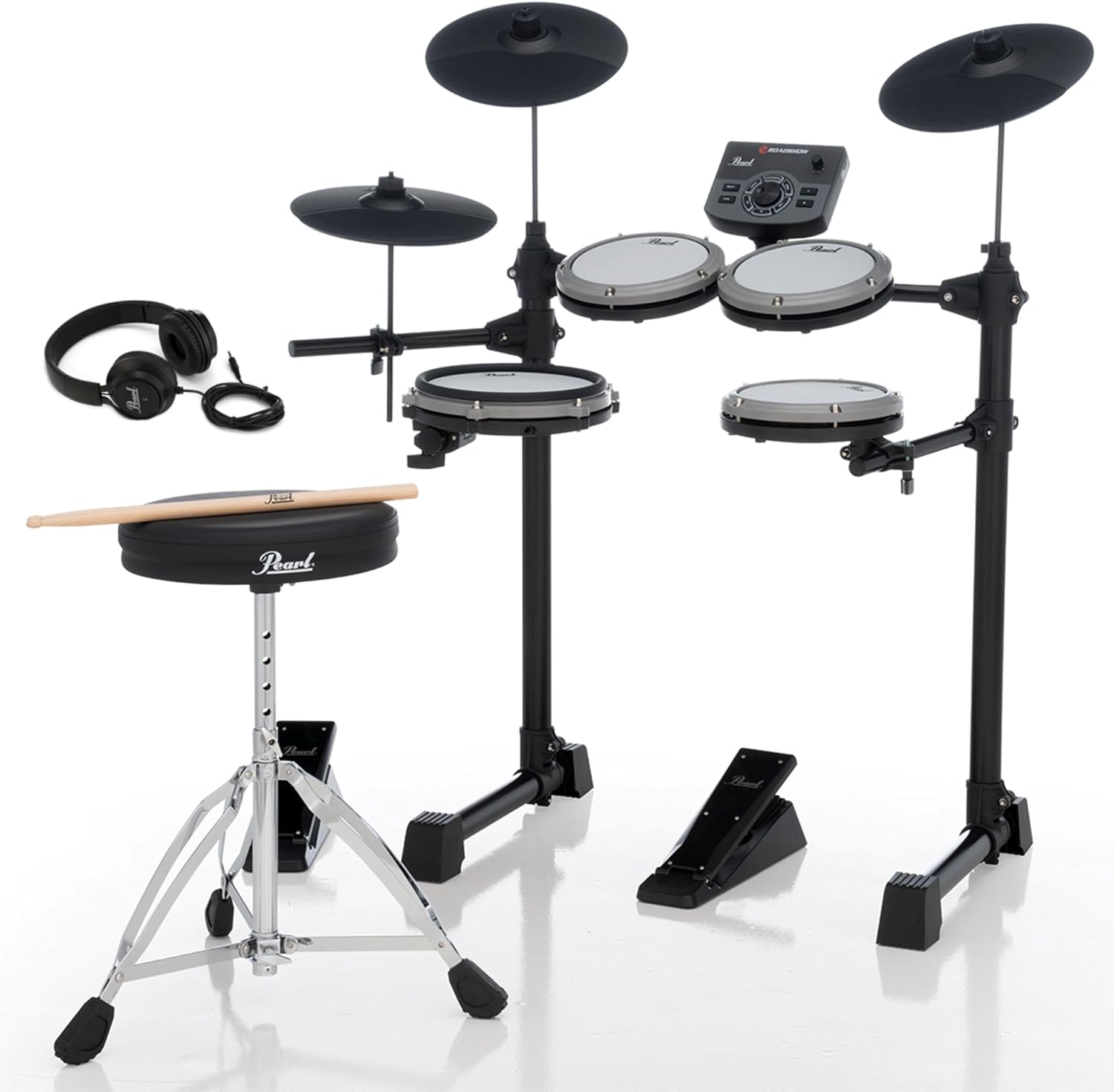
This listing-and-specification comparison looks at the Alesis Nitro Max, Donner DED-200 in the five-pad/three-cymbal listing, and Pearl ERS1000 eRoadshow. It is not a hands-on test of rebound, trigger accuracy or noise, and it does not rank long-term reliability.
Compare the physical playing setup
The exact Nitro Max listing describes a 10-inch dual-zone mesh snare, three 8-inch mesh toms, a kick tower with pedal, three 10-inch cymbal pads and a hi-hat foot controller. The crash has a choke function. Check the spacing you can achieve on the rack rather than deciding from the number of pieces alone.
The exact DED-200 listing describes an 8-inch dual-zone mesh snare, three 8-inch mesh toms and a 6-inch kick pad, plus 10-inch hi-hat, crash and ride pads. This is the five-pad/three-cymbal listing, not a DED-200X package or an assumed newer Bluetooth revision. Confirm which pads and cymbals are supplied with the exact version.
The Pearl ERS1000 listing describes four mesh drum pads, cymbal pads and two pedal controllers. A pedal controller and a beater striking a separate kick pad are different physical arrangements. If you are following a teacher’s exercises, compare the actual pedal action and setup with the technique you need to practise; neither arrangement proves a better feel or a quieter floor impact without testing.
Trace the audio and MIDI connections
The Nitro Max module manual describes wired headphone and audio outputs, an auxiliary input and USB-B MIDI. It explicitly states that USB sends MIDI information, not audio. A MIDI connection can trigger compatible software, but it is not by itself a recording of the module’s sound. Check your computer, software and cable requirements before planning a recording setup.
The DED-200 manual describes headphone, auxiliary and audio-output connections and a USB-MIDI interface. Match the instructions to the actual module and kick input mode. Do not assume that another DED-series module’s Bluetooth or recording features belong to this package.
For the Pearl kit, check the exact module’s connectors and operating instructions before buying cables, adapters or an amplifier. A package name or photograph does not establish every output, host-software requirement or included lead.
Quiet is not silent
Mesh pads and headphone practice do not establish that a kit will be inaudible in the next room or the room below. Consider stick impact, kick action, pedal movement and the floor as well as the module volume. None of the specifications here is a measured noise comparison or a guarantee that neighbours will not hear you.
Measure the space for the assembled rack, pedal travel, throne and your movement around the kit. A foldable rack still needs a usable playing position, and a kit’s height adjustment is not a universal fit promise. If floor noise matters, assess the intended room and setup rather than relying on a “quiet” label alone.
Check what completes the practice station
The DED-200 listing names a throne, headphones, sticks, bass pedal, hi-hat control and audio cable. Pearl’s listing also describes a throne, headphones and sticks. Confirm the actual current contents for each package; do not assume the same extras are included with the Nitro Max or with every seller bundle.
Before deciding, check the exact model, pedal arrangement, listening connection, setup space and return/support terms. This comparison does not establish current price, stock, warranty performance, lesson access or an overall winner.