Instrument and equipment comparison
Portable keyboards for learning songs: keys, lessons and connections
A portable keyboard can support several different practice routines. You might want to work through built-in songs, follow illuminated notes, or try a melody over an accompaniment. Those are different jobs: a longer sound list does not establish that an instrument will teach you faster.
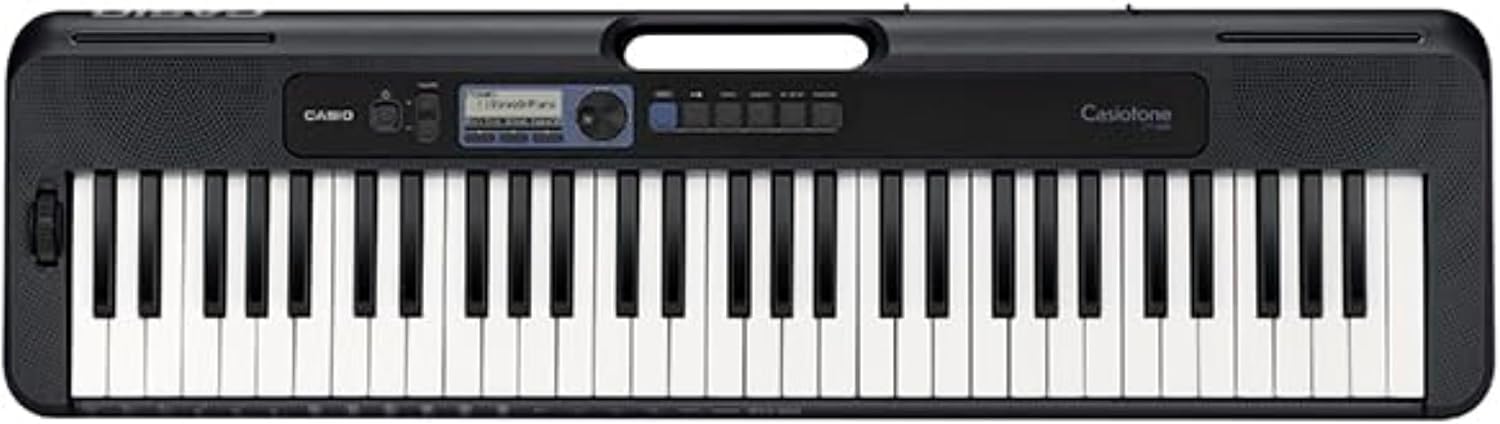
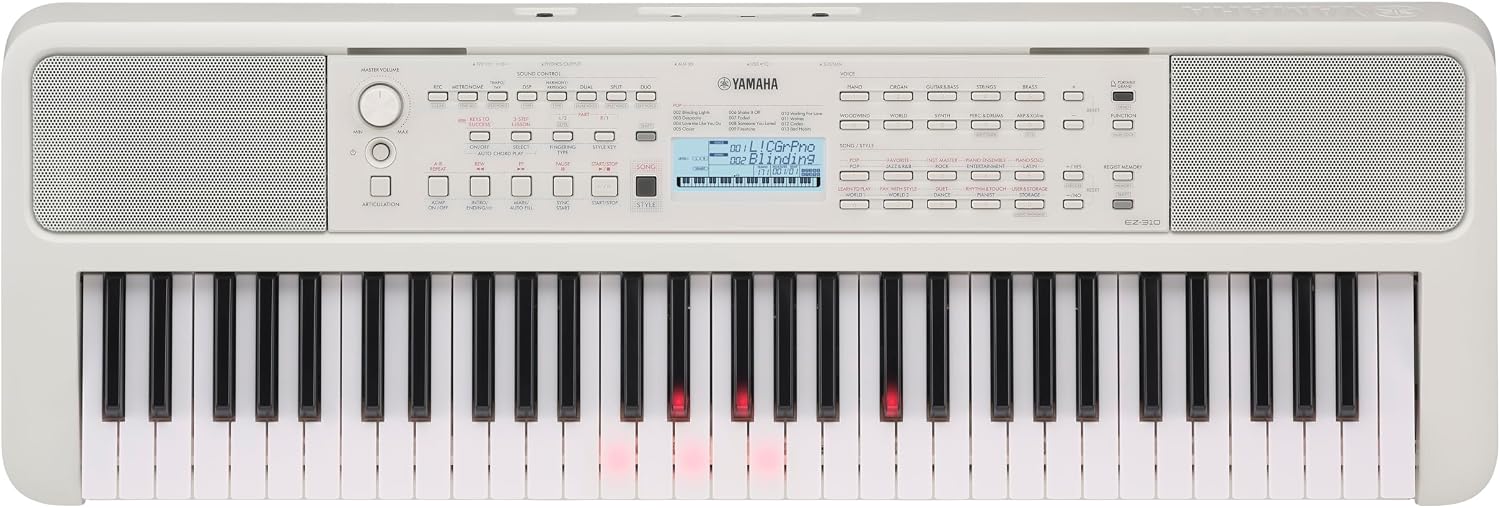
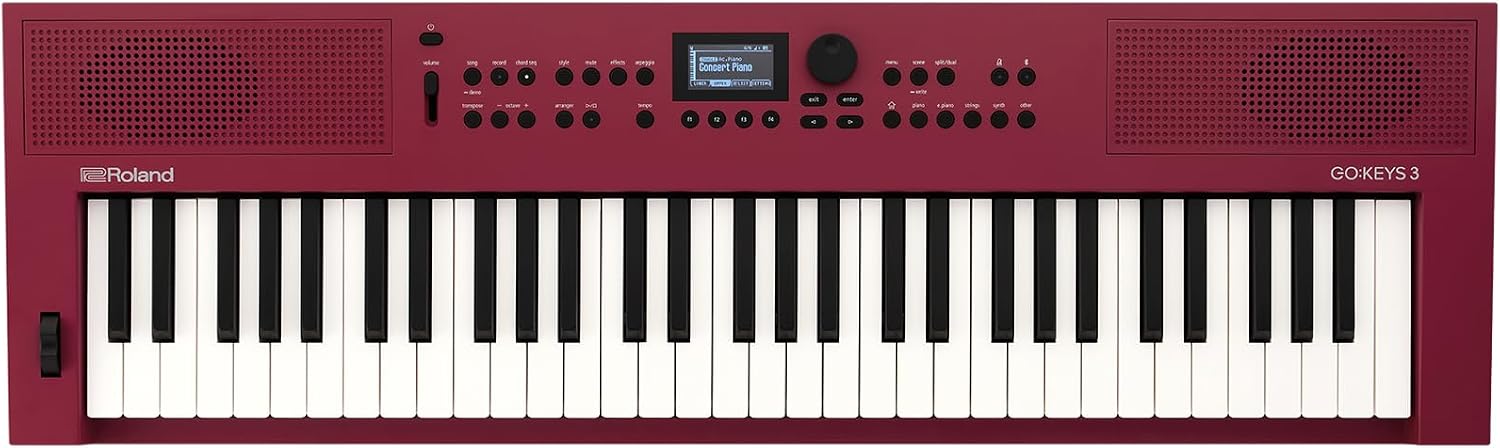
This specification comparison looks at the Casio CT-S300, Yamaha EZ-310 and Roland GO:KEYS 3 in dark red. It is not a hands-on test or a ranking of customer satisfaction. Start with the kind of practice you plan to repeat, then check the space, support and connections you need.
Three approaches to song practice
| Model | Practice tools in the manufacturer specifications | Space and connection checks |
|---|---|---|
| Casio CT-S300 | 61 keys with two touch-response levels or response off; 60 built-in songs with left, right or both parts switched off; accompaniment rhythms and pitch-bend wheel. | About 93.0 × 25.6 × 7.3 cm and 3.3 kg excluding batteries. USB Micro-B MIDI, headphones/output, audio input and an assignable pedal connection. |
| Yamaha EZ-310 | 61 touch-sensitive keys; the exact listing identifies lighted keys. Keys to Success, Listening/Timing/Waiting lessons and A-B Repeat support phrase practice. | About 94.1 × 31.7 × 10.5 cm and 4.6 kg excluding batteries. USB to Host carries audio/MIDI; headphones/output, sustain-pedal and AUX IN connections. |
| Roland GO:KEYS 3 | 61 velocity-sensitive keys, automatic accompaniment, a chord sequencer, metronome and recording functions offer a creation-oriented route into playing. | About 95.0 × 28.6 × 8.7 cm without a music rest; 4.5 kg. USB-C computer audio/MIDI, USB-A memory/ext-device, headphones and hold-pedal connections. |
These are manufacturer-declared configurations, not our own measurements. The sources are Casio’s CT-S300 User’s Guide, Yamaha’s EZ-310 specifications and Roland’s GO:KEYS 3 specifications/reference manual. Check the exact model and accessories when buying: a shared manual or similar name does not make every feature interchangeable.
Choose a practice routine before comparing sounds
For working on separate hands, the CT-S300’s song-part controls are worth examining. For following notes and repeating short exercises, compare the EZ-310’s lighted-key approach and lesson sequence with how you prefer to learn. For trying a tune over a backing pattern or experimenting with chord progressions, inspect the GO:KEYS 3’s accompaniment and sequencer workflow.
Those feature differences do not establish a learning outcome. If a teacher has assigned a particular exercise or method, check that the keyboard can support it. A practice plan still needs time spent listening, repeating and coordinating both hands; illuminated notes are not a substitute for every musical skill.
Make the setup usable every day
Measure the support surface as well as the keyboard. Leave room for your hands, a seat and any connected leads. Roland lists a separate optional music rest, and its rest-on footprint is larger than the dimensions above. Do not infer that a stand, bench, pedal or rest is included merely because an accessory appears in a picture.
All three manufacturers describe battery and adaptor operation, but the battery count and supported chemistry differ. Casio and Yamaha use six AA cells; Roland uses eight AA alkaline or NiMH cells. Check the correct adaptor and battery instructions for the exact instrument. Estimated runtime is not a guarantee for your volume, batteries or playing conditions.
Before connecting headphones, a pedal or a computer, compare both connector size and signal type. A USB socket does not by itself promise compatibility with every app or device. These instruments also differ in USB MIDI versus audio capabilities. Check the manufacturer’s connection instructions and your host requirements rather than buying a cable by appearance.
Before you decide
Confirm the exact model, finish and current package contents. Then check the lesson workflow, available support, return terms and any separately needed accessories. This comparison does not establish current price, availability, warranty performance or long-term reliability, and it does not select an overall winner.